



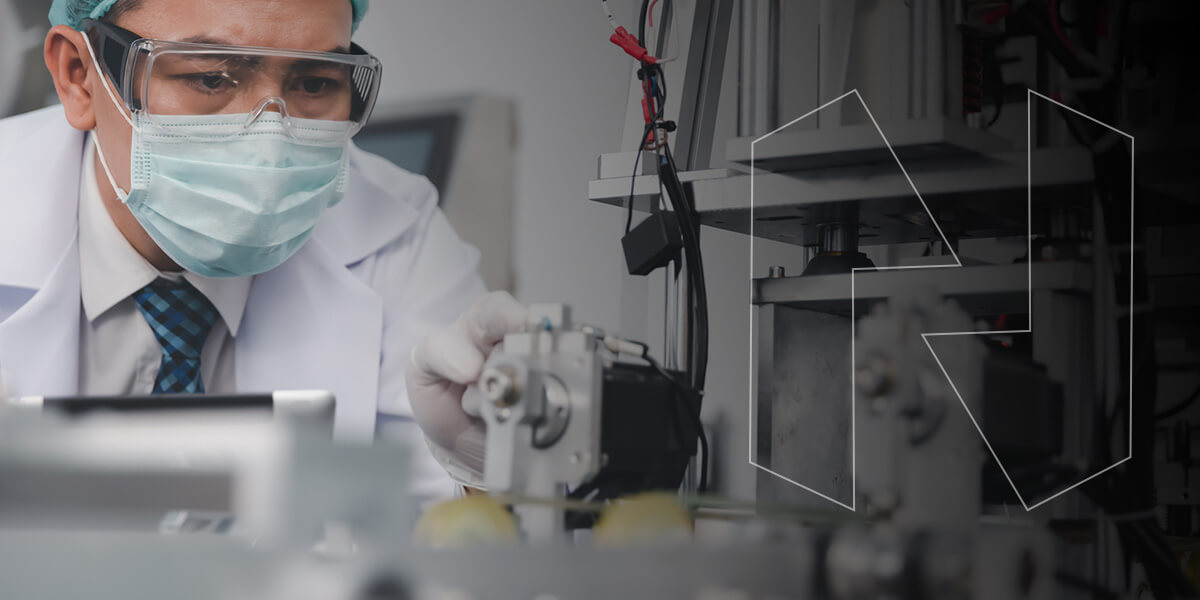
Automating medical device manufacturing reduces costs, strengthens quality control, and increases production capacity. Technologies like collaborative robotics, AI-powered analytics, and automated packaging solutions allow manufacturers to scale output while meeting strict regulatory standards. New Concept Technology delivers end-to-end automation capabilities tailored to the medical industry.
The medical device industry demands precision, efficiency, and reliability. As a medical device manufacturer, staying ahead requires more than innovation: it demands efficiency at scale. That is where medical device automation delivers a measurable advantage.
Medical manufacturing technology has advanced greatly, and automation can propel it further. The benefits of automating medical device manufacturing are connected to each step of the manufacturing process, from assembly and quality control to packaging and compliance. This guide provides the foundational knowledge needed to make informed decisions about your medical device manufacturing operations.
What Is Medical Device Automation?
Medical device automation integrates advanced technologies to help produce medical instruments and equipment more efficiently. By implementing automation strategies, manufacturers can enhance their production processes and overall operational efficiency. These technologies include robotics, artificial intelligence (AI), and machine learning (ML). Automation’s primary goal is to transform traditional production methods into cutting-edge systems that meet the demands of modern health care.
Medical device manufacturers can achieve significant efficiency gains by automating manufacturing processes while maintaining stringent quality standards. Tasks that can be automated range from assembly and quality control to packaging and logistics. Automation frees up valuable human resources for more complex and strategic projects, enabling your team to focus where human judgment matters most.
Benefits You Can Expect
Medical device manufacturers can stay competitive in this evolving market by leveraging medical manufacturing technology. The three core advantages of automation are improved cost efficiency, enhanced quality control, and increased production capacity.
1. Improved Cost Efficiency
Automation in medical device manufacturing brings significant cost efficiency to businesses. These benefits stem from several interconnected factors:
| Cost Driver | How Automation Addresses It |
|---|---|
| Manual labor for repetitive tasks | Reduces reliance on manual work, cutting labor costs and payroll expenses |
| Material waste and inefficient usage | Automated systems optimize resource use and minimize waste throughout production |
| Extended production cycles | Automation raises production speed and consistency to levels humans cannot match, reducing time and cost per unit |
Automation helps complete tasks accurately and consistently, eliminating the variability associated with human error. An automated production line also reduces downtime and increases output, which further lowers production costs over time.
Because components are produced by the same automated systems under the same parameters, manufacturers can achieve consistency that manual processes cannot replicate at scale. In a regulatory environment as strict as medical device manufacturing, that consistency is a competitive necessity.
2. Enhanced Quality Control
Quality control is critical when manufacturing medical devices, ensuring their safety and effectiveness. Automated systems with sensors and monitoring devices can continuously assess product quality. Closely monitoring the production line improves consistency, accuracy, and compliance with regulatory standards.
A high level of oversight minimizes the risk of defects and product recalls. It helps protect the manufacturer’s reputation while ensuring end users’ safety and well-being. This is especially important in the medical field, where product failures can have life-threatening consequences.
3. Increased Production Capacity
Automation enables businesses to increase their production capacity to meet growing demand effectively. With these systems integrated, automated production lines can operate around the clock. Manufacturers can streamline workflows, optimize production schedules, and ramp up output without compromising quality.
This scalability is crucial in the medical device industry, which always demands the timely delivery of life-saving equipment. Automated production lines help manufacturers meet market demands and capitalize on growth opportunities, providing a measurable competitive edge.
Automated production lines can operate continuously, removing the capacity constraints that limit manual manufacturing and enabling faster response to market demand.
Types of Automation in the Medical Industry
Medical device manufacturers can use the following automated technologies to increase productivity, lower costs, and minimize the risk of human error.
1. Collaborative Robotics
Automation does not necessarily replace human labor. Instead, medical device manufacturers use collaborative robots, known as cobots. Cobots operate alongside individuals on production lines, allowing staff to focus on tasks that require human judgment, creativity, and problem-solving.
For instance, a medical device robot can handle the majority of a product’s heat-sealing processes, including loading and unloading trays and lids from a desktop heat-sealing machine. Cobots can initiate the heating process and handle these repetitive tasks with precision and speed, freeing employees to focus on quality control and higher-value work.
2. AI-Powered Analytics
Medical device manufacturers have access to large amounts of data, but finding accurate information for manufacturing and forecasting purposes can be challenging. AI-powered systems can help with data analysis, predictive maintenance, and process optimization. These systems analyze vast amounts of data to locate valuable insights that improve decision-making and help manufacturers identify areas for improvement.
For instance, AI algorithms can predict equipment failures before they occur, enabling proactive maintenance procedures that minimize unplanned downtime. These systems also facilitate the review of key performance indicators (KPIs) and essential metrics to optimize manufacturing processes and ensure consistent product quality.
3. Automated Packaging Solutions
Automated packaging systems streamline the packing process by replacing manual labor with intelligent software. This reduces human error and ensures product integrity. Automated packaging systems can perform flow wrapping, cartoning, fill and pouching tasks, helping medical device manufacturers increase throughput, reduce production costs, and maintain compliance with regulatory standards.
Additionally, automated packaging solutions boost workflow efficiency, allowing manufacturers to meet rising demand without sacrificing quality or consistency.
How New Concept Technology Supports Medical Device Automation
New Concept Technology is a trusted leader in the medical equipment manufacturing industry. We offer extensive capabilities in medical manufacturing technology, specializing in the design, engineering, and fabrication of automated systems. Our expertise in medical device automation aligns with the industry’s growing demand for efficiency and precision.
Our single-source manufacturing approach eliminates the need to work with multiple vendors, from conceptualization through to the finished product. Our technology and advanced robotics help businesses achieve higher productivity and quality assurance levels in their manufacturing operations.
Whether automating assembly lines, optimizing production workflows, or implementing advanced quality control measures, New Concept Technology delivers innovative solutions that drive efficiency and profitability. Our comprehensive solutions are tailored to each client’s specific needs.
Frequently Asked Questions
What is medical device automation?
Medical device automation integrates advanced technologies such as robotics, AI, and machine learning into the manufacturing process. The goal is to transform traditional production methods into more efficient, consistent, and scalable systems. Automated processes can cover everything from assembly and quality control to packaging and regulatory compliance.
How does automation reduce costs in medical device manufacturing?
Automation reduces costs by decreasing reliance on manual labor for repetitive tasks, optimizing material usage to reduce waste, and improving production speed. These factors collectively lower the cost per unit. Automated lines also experience less unplanned downtime, which further reduces operational expenses over time.
What are cobots and how are they used in medical manufacturing?
Cobots, or collaborative robots, are designed to work alongside human employees on production lines. Unlike traditional industrial robots, cobots are built to complement human skills rather than replace them entirely. In medical device manufacturing, cobots often handle repetitive tasks like heat-sealing, loading, and unloading, while workers focus on quality control and more complex responsibilities.
How does AI improve medical device manufacturing processes?
AI-powered analytics systems analyze large volumes of manufacturing data to surface actionable insights. They can predict equipment failures before they occur, enabling proactive maintenance that prevents costly downtime. AI also supports review of key performance indicators to optimize production workflows and ensure consistent product quality across runs.
Why is quality control especially important in medical device manufacturing?
Medical devices directly affect patient health and safety. Any defect in a device can have serious consequences for end users. Rigorous quality control also ensures compliance with regulatory standards that govern the medical industry. Automated monitoring systems continuously assess product quality, reducing defect rates and minimizing the risk of product recalls.
What should I look for in a medical device automation partner?
Look for a partner with end-to-end capabilities: from design engineering and prototyping through to manufacturing, assembly, and quality assurance. Single-source providers reduce the complexity of managing multiple vendors and ensure consistent communication across the project. Certifications such as ISO 13485 are a strong indicator of a manufacturer’s commitment to medical-grade quality standards.
Ready to Automate Your Medical Device Manufacturing?
New Concept Technology offers comprehensive automation and assembly capabilities tailored to the medical industry. Contact our team to learn how we can help you improve efficiency, quality, and scalability.
Contact Us →Sources
| Organization | Resource |
|---|---|
| FDA | Overview of Device Regulation |
| ISO | ISO 13485: Medical Devices Quality Management |