


MENU

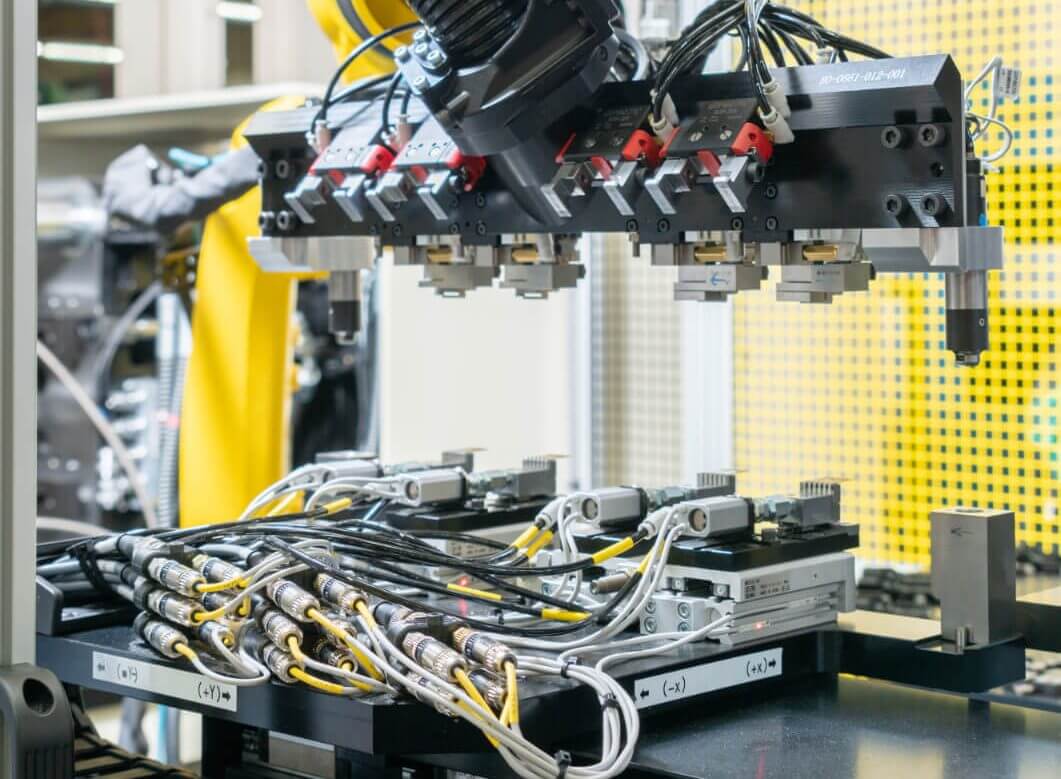
The automotive industry is evolving at an unprecedented pace. With increasing demands for innovation, efficiency, and sustainability, manufacturers are under pressure to deliver high-quality products faster than ever before. This is where automotive engineering solutions play a critical role.
Today’s manufacturers are no longer looking for fragmented services. Instead, they are seeking integrated automotive engineering solutions that unify design, engineering, prototyping, tooling, and production into a seamless process. This integrated approach ensures greater efficiency, reduced costs, and faster time-to-market—three essential components for success in a competitive landscape.
At New Concept Technology, the focus is on delivering comprehensive, single-source automotive engineering solutions that empower businesses to transform ideas into reality while maintaining superior quality standards.
Integrated automotive engineering solutions refer to a holistic approach that combines every stage of product development and manufacturing into one streamlined system. Rather than working with multiple vendors, companies benefit from a single partner that manages the entire lifecycle—from concept to production.
This includes:
By consolidating these services, manufacturers can eliminate inefficiencies, improve communication, and ensure consistency across every stage of development.
New Concept Technology exemplifies this model by offering full-service capabilities under one roof, enabling seamless transitions between each phase of production.
Traditional manufacturing often involves multiple suppliers handling different stages of production. This creates communication gaps, delays, and inconsistencies. Integrated automotive engineering solutions remove these silos by centralizing operations.
With a single-source provider, teams collaborate more effectively, ensuring that design decisions align with manufacturing capabilities from the start. This reduces costly redesigns and production errors.
Speed is everything in the automotive industry. Integrated automotive engineering solutions allow companies to move quickly from concept to production by streamlining workflows.
For example, rapid prototyping and in-house tooling enable faster iterations and testing. This means products can be refined and launched more efficiently, giving companies a competitive edge.
New Concept Technology emphasizes rapid design and prototyping to help businesses bring products to market faster while maintaining precision and quality.
Quality is non-negotiable in automotive manufacturing. Integrated automotive engineering solutions ensure that every component meets strict standards by maintaining control over the entire process.
From design validation to final production, having a unified system allows for better quality assurance and consistency. Advanced technologies such as robotics and digital inspection further enhance accuracy and reliability.
At the core of all successful automotive engineering solutions is strong design engineering. This phase involves transforming ideas into practical, manufacturable products.
By integrating design with manufacturing early in the process, engineers can optimize materials, reduce costs, and improve performance. This approach ensures that products are not only innovative but also feasible for large-scale production.
New Concept Technology’s design engineering services focus on concept development, testing, and validation to create high-performing automotive components.
Tooling is a critical component of automotive manufacturing. High-quality tools ensure precision, efficiency, and repeatability in production.
Integrated automotive engineering solutions include in-house tool fabrication, allowing for better control over quality and faster turnaround times. This eliminates dependency on external vendors and ensures that tools are optimized for specific applications.
New Concept Technology’s expertise in tool fabrication supports stamping, molding, and automation processes, delivering superior results for complex projects.
Automation is a game-changer in modern manufacturing. By incorporating automated systems, companies can reduce labor costs, increase efficiency, and improve accuracy.
Integrated automotive engineering solutions leverage automation to streamline processes and maintain consistency across production lines. Cost engineering further ensures that projects remain within budget while maximizing value.
Automation solutions from New Concept Technology help businesses enhance productivity and achieve scalable, efficient manufacturing systems.
The final stage of automotive engineering solutions involves high-volume manufacturing and assembly. Integrated systems ensure that production is efficient, scalable, and aligned with design specifications.
By combining stamping, molding, and assembly processes, manufacturers can achieve precise and consistent results. This is particularly important for automotive components that require tight tolerances and high durability.
New Concept Technology’s concept-to-product manufacturing approach ensures seamless execution from initial idea to final product.
Integrated automotive engineering solutions streamline workflows, reducing downtime and eliminating redundant processes. This leads to faster production cycles and improved overall efficiency.
By consolidating services under one provider, companies can reduce costs associated with outsourcing, logistics, and rework. Automation and cost engineering further enhance savings by optimizing resource utilization.
Collaboration is key to successful product development. Integrated automotive engineering solutions foster better communication between design, engineering, and manufacturing teams.
As demand grows, manufacturers need scalable solutions. Integrated systems allow for easy expansion and adaptation, ensuring that production can meet increasing requirements without compromising quality.
Companies that adopt integrated automotive engineering solutions gain a significant edge in the market. Faster time-to-market, superior quality, and cost efficiency position them as industry leaders.
Single-source manufacturing is a cornerstone of integrated automotive engineering solutions. By working with one provider, companies can simplify their supply chain and improve operational efficiency.
New Concept Technology operates as a single-source manufacturer, offering comprehensive services that cover every aspect of production. This approach ensures consistency, reduces risks, and delivers superior results.
Additionally, single-source manufacturing enables better quality control and faster decision-making, allowing companies to respond quickly to market changes and customer demands.
The future of automotive engineering solutions is driven by innovation and technology. Key trends include:
As these trends continue to evolve, integrated automotive engineering solutions will become even more essential for success.
Companies that embrace these advancements will be better equipped to navigate challenges and capitalize on new opportunities in the automotive industry.
New Concept Technology stands out as a leader in delivering integrated automotive engineering solutions. With decades of experience and a commitment to innovation, the company provides end-to-end services that meet the highest industry standards.
From design and prototyping to manufacturing and automation, New Concept Technology offers a seamless, efficient approach that ensures success at every stage of production.
Their expertise in automotive manufacturing, combined with advanced technologies and a customer-focused approach, makes them a trusted partner for businesses looking to stay ahead in a competitive market.

Integrated automotive engineering solutions are no longer optional—they are essential for success in today’s fast-paced automotive industry. By unifying design, engineering, and manufacturing processes, companies can achieve greater efficiency, improved quality, and faster time-to-market.
New Concept Technology exemplifies the power of integration, providing comprehensive solutions that help businesses transform ideas into reality. With a single-source approach and a commitment to innovation, they are paving the way for the future of automotive manufacturing.
If your business is ready to take the next step, consider partnering with a provider that understands the importance of integrated automotive engineering solutions. seen as a supporting function—it will be recognized as a strategic driver of success in automated manufacturing.