


MENU

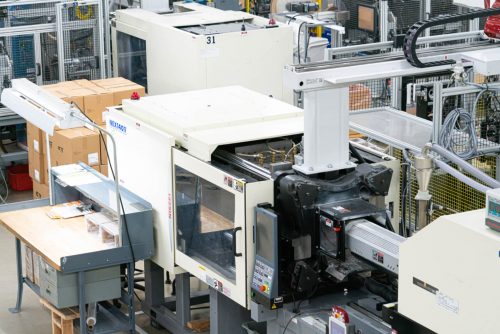
The manufacturing industry is entering a new era—one driven by automation, data integration, and precision engineering. At the center of this transformation lies tool design and fabrication, a critical function that determines the efficiency, scalability, and success of modern production systems.
The future of tool design and fabrication in automated manufacturing is no longer just about creating durable tools. It’s about engineering intelligent, adaptable, and highly integrated systems that align with automated workflows. As companies push toward faster production cycles, reduced costs, and higher quality standards, tooling must evolve to meet these demands.
One of the most significant changes shaping the future of tool design and fabrication in automated manufacturing is the move toward full integration. Traditionally, tooling was developed as a standalone process, often disconnected from design engineering and production workflows. Today, that model is no longer sustainable.
Modern manufacturing requires tools that are developed alongside the product itself. This means tool designers, engineers, and automation specialists must collaborate from the earliest stages of development. By integrating tooling into the entire product lifecycle—from concept to production—manufacturers can eliminate inefficiencies, reduce redesigns, and accelerate time to market.
This integrated approach ensures that tooling is optimized not just for function, but for automation compatibility, scalability, and long-term performance.
Automation is fundamentally changing what tools are expected to do. In automated environments, tools must operate with extreme precision, consistency, and reliability. Even minor variations can disrupt entire production lines.
As a result, the future of tool design and fabrication in automated manufacturing focuses heavily on precision engineering and repeatability. Tools must be capable of maintaining tight tolerances while operating at high speeds, often in conjunction with robotic systems and advanced machinery.
Additionally, tools are now being designed with automation in mind. This includes considerations such as:
These advancements ensure that tools are not just functional but fully aligned with the demands of automated production environments.
Digital transformation is playing a major role in the evolution of tool design. Advanced software, simulation tools, and digital modeling are allowing engineers to design, test, and refine tooling before it is ever physically built.
This shift is critical for the future of tool design and fabrication in automated manufacturing because it reduces risk and improves efficiency. Engineers can identify potential issues early in the design phase, optimize tool performance, and ensure compatibility with automated systems.
Digital simulation also enables rapid iteration. Instead of relying solely on physical prototypes, manufacturers can test multiple design variations virtually, significantly reducing development time and cost.
As digital tools continue to evolve, they will play an even greater role in creating smarter, more efficient tooling solutions.
Speed is a competitive advantage in modern manufacturing, and rapid prototyping is helping companies stay ahead. By quickly developing and testing tooling concepts, manufacturers can move from idea to production faster than ever before.
Rapid prototyping allows for early validation of tool designs, ensuring that they meet performance requirements before full-scale fabrication begins. This reduces costly errors and shortens development cycles.
In the context of automated manufacturing, rapid prototyping is especially valuable because it enables teams to test how tools interact with automated systems. This ensures seamless integration and minimizes disruptions during production.
The future of tool design and fabrication in automated manufacturing will rely heavily on rapid prototyping to drive innovation and efficiency.
Gone are the days of one-size-fits-all tooling. Modern manufacturing demands customized solutions tailored to specific applications, materials, and production goals.
The future of tool design and fabrication in automated manufacturing emphasizes flexibility. Tools must be designed to adapt to changing production requirements, whether that involves new product designs, material changes, or increased production volumes.
Customization also extends to the integration of multiple manufacturing processes. For example, tools may need to support injection molding, insert molding, stamping, or assembly operations within a single automated system.
This level of flexibility allows manufacturers to respond quickly to market demands while maintaining efficiency and quality.
As automation and data analytics continue to advance, tooling is becoming smarter. Smart tools are equipped with sensors and monitoring capabilities that provide real-time data on performance, wear, and production conditions.
This data-driven approach is transforming the future of tool design and fabrication in automated manufacturing by enabling predictive maintenance and continuous improvement.
Smart tooling can:
By leveraging data, manufacturers can reduce downtime, extend tool life, and improve overall efficiency.
Cost efficiency remains a top priority in manufacturing, and tooling plays a critical role in achieving it. The future of tool design and fabrication in automated manufacturing involves a strong focus on cost engineering.
Rather than simply reducing upfront costs, manufacturers are looking at the total lifecycle cost of tooling. This includes design, fabrication, maintenance, and operational efficiency.
By optimizing tool design for automation, manufacturers can reduce labor costs, minimize waste, and improve production speed. This holistic approach ensures that tooling contributes to long-term profitability.
Another major trend shaping the future of tool design and fabrication in automated manufacturing is the rise of single-source manufacturing. By consolidating design, engineering, tooling, and production under one roof, manufacturers can streamline processes and improve collaboration.
This approach eliminates the delays and communication challenges that often occur when multiple vendors are involved. It also ensures that all aspects of the manufacturing process are aligned, from tooling design to final production.
Single-source manufacturing enables faster problem-solving, better quality control, and more efficient project execution—making it a key driver of innovation in the industry.
Sustainability is becoming an increasingly important consideration in manufacturing. The future of tool design and fabrication in automated manufacturing will include a stronger focus on environmentally responsible practices.
This includes designing tools that:
By incorporating sustainability into tooling design, manufacturers can reduce their environmental impact while maintaining high levels of performance and efficiency.
Looking ahead, the future of tool design and fabrication in automated manufacturing will be defined by innovation, integration, and intelligence. As technology continues to evolve, tooling will become more advanced, more connected, and more capable than ever before.
Manufacturers that embrace these changes will be better positioned to compete in a rapidly changing industry. By investing in advanced tooling solutions, leveraging digital technologies, and adopting integrated manufacturing approaches, companies can achieve greater efficiency, higher quality, and faster time to market.
Ultimately, tooling will no longer be seen as a supporting function—it will be recognized as a strategic driver of success in automated manufacturing.

The future of tool design and fabrication in automated manufacturing is not just about improving tools—it’s about transforming the entire manufacturing process. From digital design and rapid prototyping to smart tooling and automation integration, every aspect of tooling is evolving to meet the demands of modern production.
Companies that prioritize innovation, collaboration, and efficiency in their tooling strategies will lead the way in this new era of manufacturing.