


MENU

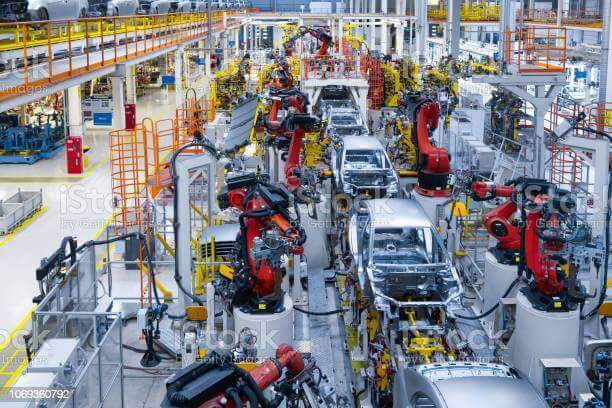
Vehicle parts manufacturing is the backbone of modern automotive performance, safety, and reliability. From critical under-the-hood components to intricate electrical connectors and structural parts, vehicle parts manufacturing determines how well a vehicle performs under real-world conditions. As vehicle platforms become more advanced and expectations for durability increase, precision and process control are no longer optional; they are essential.
At New Concept Technology, vehicle parts manufacturing is approached as a science-driven discipline that combines engineering expertise, automation, and rigorous quality systems. This integrated approach ensures that every component leaving the production floor meets exact specifications and performs consistently throughout its service life.
Precision is the foundation of effective vehicle parts manufacturing. Automotive components are designed with extremely tight tolerances because even minor dimensional variations can lead to vibration, premature wear, noise, or system failure. In vehicle parts manufacturing, precision ensures that each component fits seamlessly within complex assemblies and performs as intended.
High-precision vehicle parts manufacturing reduces variability across production runs. This consistency is critical for automotive OEMs and Tier 1 suppliers that rely on interchangeable parts to streamline assembly operations. Precision-driven vehicle parts manufacturing also improves long-term reliability, which is especially important for powertrain, safety, and electrical systems.
Modern vehicle parts manufacturing relies on advanced tooling, high-speed stamping, injection molding, and automated inspection to maintain precision at scale. By controlling each stage of production, manufacturers can deliver repeatable results without sacrificing throughput.
Process control is what transforms precision into performance in vehicle parts manufacturing. While precision defines how accurately a part is made, process control ensures that accuracy is maintained throughout the entire production lifecycle. In vehicle parts manufacturing, process control encompasses material selection, tooling design, machine calibration, real-time monitoring, and post-production validation.
A controlled vehicle parts manufacturing process minimizes defects, reduces waste, and enhances production efficiency. More importantly, it ensures that performance-critical components behave consistently under load, temperature changes, and long-term use. This is particularly vital in vehicle parts manufacturing for automotive electronics, connectors, and safety-related components.
By implementing automated monitoring systems and data-driven quality checks, vehicle parts manufacturing becomes predictable rather than reactive. Manufacturers can identify trends, correct deviations early, and continuously improve production outcomes.
Integrated manufacturing plays a central role in modern vehicle parts manufacturing. When design engineering, tooling, fabrication, and production occur under one roof, communication gaps are eliminated, and accountability is strengthened. This integration allows vehicle parts manufacturing teams to optimize designs for manufacturability without compromising performance requirements.
In integrated vehicle parts manufacturing environments, tooling is designed specifically for the intended production process. This reduces setup time, improves dimensional accuracy, and extends tool life. Integrated manufacturing also allows for faster iteration and refinement, which is essential in today’s rapidly evolving automotive landscape.
By aligning design intent with production execution, vehicle parts manufacturing becomes more efficient and more reliable. This approach also supports scalability, enabling manufacturers to move seamlessly from prototyping to high-volume production.
Automation has become a defining feature of high-performance vehicle parts manufacturing. Automated systems reduce human variability, increase throughput, and improve consistency across large production volumes. In vehicle parts manufacturing, automation supports repeatable processes that deliver uniform results shift after shift.
Robotic handling, automated assembly, and in-line inspection systems allow vehicle parts manufacturing operations to maintain tight tolerances even at high speeds. Automation also enhances worker safety by reducing manual handling of repetitive or hazardous tasks.
When automation is paired with real-time data collection, vehicle parts manufacturing gains valuable insight into machine performance, cycle times, and quality trends. This data-driven approach enables continuous optimization and long-term cost control.
Material selection is a critical decision in vehicle parts manufacturing. Automotive components must withstand mechanical stress, thermal cycling, chemical exposure, and environmental conditions. Choosing the right materials and controlling how they are processed is essential for achieving consistent performance.
Vehicle parts manufacturing often involves metals, engineered plastics, or hybrid components produced through insert molding or overmolding. Each material behaves differently during forming, cooling, and assembly. Effective vehicle parts manufacturing accounts for these variables through controlled processing parameters and rigorous testing.
By maintaining strict material traceability and validation, vehicle parts manufacturing ensures that every component meets performance and compliance requirements. This level of control is especially important for automotive applications governed by stringent quality standards.
Quality systems are the backbone of dependable vehicle parts manufacturing. Certifications such as ISO and IATF reflect a manufacturer’s commitment to structured processes, documentation, and continuous improvement. These systems provide a framework for managing risk and ensuring consistency.
In vehicle parts manufacturing, quality systems support everything from incoming material inspection to final part validation. Advanced measurement technologies, including automated metrology and vision inspection, enable manufacturers to verify dimensional accuracy and detect defects early.
A strong quality culture reinforces accountability at every level of vehicle parts manufacturing. When quality is embedded into the process rather than inspected in at the end, performance outcomes improve dramatically.
The ultimate goal of vehicle parts manufacturing is long-term performance. Automotive components must deliver consistent functionality over thousands of operating cycles and varying environmental conditions. Precision and process control work together to make this possible.
Vehicle parts manufacturing that prioritizes durability reduces warranty claims, improves customer satisfaction, and strengthens brand reputation. By controlling variables and investing in robust processes, manufacturers can deliver components that meet both current and future automotive demands.
As vehicles continue to evolve with electrification, connectivity, and advanced safety systems, vehicle parts manufacturing must keep pace. Precision-driven, process-controlled manufacturing environments are best positioned to support these innovations.
Advanced vehicle parts manufacturing provides a measurable competitive advantage. Manufacturers that invest in precision tooling, integrated processes, and automation can deliver higher quality components at lower total cost. This efficiency translates into faster time-to-market and greater flexibility for automotive customers.
Vehicle parts manufacturing excellence also supports collaboration. When manufacturers can reliably meet specifications and scale production, they become trusted partners rather than just suppliers. This partnership-driven approach is increasingly important in a global automotive supply chain.
By combining engineering expertise with disciplined execution, vehicle parts manufacturing becomes a strategic asset rather than a cost center.

Vehicle parts manufacturing is more than producing components—it is about enabling performance, safety, and reliability across the automotive industry. Precision ensures accuracy, process control ensures consistency, and integration ensures accountability. Together, these elements define high-performing vehicle parts manufacturing.
Manufacturers that embrace this holistic approach are better equipped to meet the challenges of modern automotive production. As expectations continue to rise, vehicle parts manufacturing rooted in precision and process control will remain the standard for excellence.