


MENU

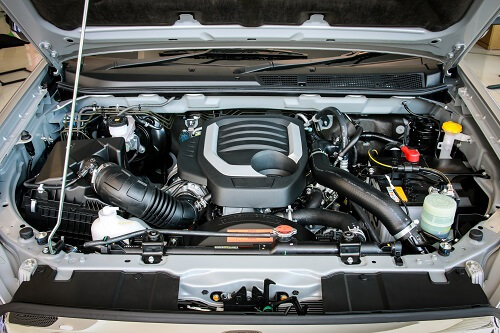
In advanced manufacturing, performance is no longer optional. It is expected. Components must withstanThe automotive industry continues to push the limits of engineering precision, safety standards, and performance expectations. Modern vehicles contain thousands of interconnected parts, each required to operate flawlessly under heat, vibration, and long-term mechanical stress. As vehicles become more electrified, connected, and lightweight, automotive component manufacturing has evolved into a highly specialized and technology-driven discipline.
Today, automotive component manufacturing is not just about producing parts at scale. It is about engineering reliability into every stamped, molded, assembled, and automated system from the beginning of the design process.
At New Concept Technology, automotive component manufacturing is supported by integrated design engineering, high-speed stamping, injection molding, tool fabrication, and automation capabilities, all operating under strict automotive quality standards. This single-source approach ensures precision, consistency, and performance from concept to production.
Reliability in automotive component manufacturing directly impacts vehicle safety, customer satisfaction, and brand reputation. A single failure in a sensor housing, electrical connector, or stamped contact can disrupt an entire system.
Modern automotive systems must endure:
Advanced automotive component manufacturing incorporates robust material selection, precision tooling, automated inspection systems, and process validation to eliminate weak points before they reach the road.
By integrating design engineering early in development, manufacturers can anticipate stress factors and optimize geometry, material thickness, and reinforcement features before production begins. This proactive strategy significantly reduces warranty risks and field failures.
High-performance vehicles depend on tightly controlled tolerances. Even minor dimensional inconsistencies can affect electrical connectivity, mechanical fit, and system responsiveness.
Automotive component manufacturing relies on:
New Concept Technology’s high-speed stamping capabilities allow production of intricate metal components at speeds up to 1,600 strokes per minute while maintaining premium tolerances. This level of precision ensures electrical contacts and mechanical features perform consistently across millions of cycles.
Injection and insert molding technologies further enhance automotive component manufacturing by combining metal strength with engineered plastics. Reinforced components reduce weight while maintaining durability, which improves fuel efficiency and overall vehicle performance.
Automation has become a cornerstone of advanced automotive component manufacturing. Manual processes introduce variability, which can lead to inconsistencies in high-volume production environments.
Automated manufacturing systems improve reliability by:
New Concept Technology’s automation and assembly capabilities support high-volume automotive production with integrated inspection and process monitoring systems. These systems ensure every automotive component meets strict performance specifications before leaving the facility.
Automation also enables scalable production. As vehicle demand increases, automated systems maintain output levels without sacrificing quality.
Lightweighting remains a major focus within automotive component manufacturing. Engineers continuously search for materials that reduce vehicle mass while maintaining strength and safety.
Advanced polymers, reinforced thermoplastics, and precision-stamped alloys are now common in modern automotive systems. Insert molding techniques allow metal reinforcement to be strategically placed within molded components, optimizing structural integrity while minimizing excess material.
This balance between weight reduction and strength contributes directly to improved fuel economy, extended electric vehicle range, and reduced emissions.
Through integrated design engineering and tool fabrication, New Concept Technology ensures material selection and component geometry work together for maximum durability .
Automotive component manufacturing operates under some of the most rigorous quality certifications in the world. Compliance with IATF 16949 standards requires documented process control, continuous improvement, and strict validation protocols.
Quality in automotive component manufacturing extends beyond inspection. It begins with concurrent engineering and risk assessment during design development. By analyzing potential failure modes early, manufacturers can implement corrective measures before tooling is finalized.
New Concept Technology’s commitment to quality, accountability, and continuous improvement supports automotive customers with consistent performance and regulatory compliance.
This disciplined approach reduces variation, enhances traceability, and ensures components perform reliably throughout their service life.
Speed matters in automotive innovation. New vehicle platforms and electric vehicle technologies require rapid development cycles. Delays in component manufacturing can slow entire product launches.
Advanced automotive component manufacturing benefits significantly from a single-source model. When design engineering, tooling, stamping, molding, automation, and assembly are managed under one roof, communication improves, and timelines shrink.
New Concept Technology provides comprehensive manufacturing services from concept development to full-scale production. This integration reduces supply chain complexity and accelerates validation cycles.
Instead of coordinating multiple vendors, automotive manufacturers gain a strategic partner capable of delivering complete solutions with enhanced accountability.
The rapid growth of electric vehicles and advanced driver assistance systems has increased the complexity of automotive component manufacturing. Electrical connectors, sensor modules, battery housings, and micro-electronic assemblies must perform flawlessly under demanding operating conditions.
Advanced stamping supports intricate conductive contacts. Insert molding protects sensitive electronics. Automated assembly ensures precise integration of micro-components.
As automotive systems become smarter and more connected, the need for precision automotive component manufacturing will continue to expand. Manufacturers who combine automation, engineering expertise, and material innovation will lead this transformation.

Advanced automotive component manufacturing directly improves vehicle reliability and performance by combining precision engineering, automation, material innovation, and strict quality control.
From high-speed stamping and insert molding to fully automated assembly systems, every process contributes to durability, consistency, and efficiency. When managed through a single-source manufacturing partner, these capabilities work together to reduce risk, improve scalability, and accelerate time to market.
As automotive technology continues to evolve, the foundation of reliability will always depend on superior automotive component manufacturing. By investing in integrated engineering and advanced production systems, manufacturers can deliver components that meet the performance demands of today and the innovation challenges of tomorrow.