


MENU

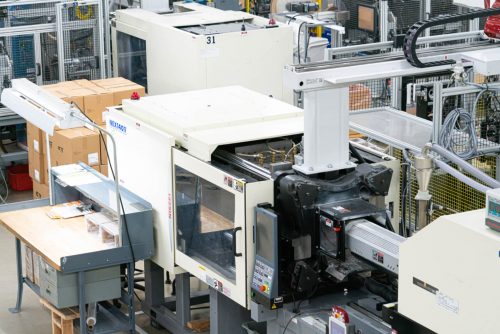
Precision injection molding is a critical manufacturing process for industries that demand repeatability, tight tolerances, and dependable performance at scale. As production volumes increase, maintaining part-to-part consistency becomes more challenging—and more important. Precision injection molding addresses this challenge by combining advanced tooling, controlled processes, and automation to deliver reliable results across millions of cycles.
At New Concept Technology, precision injection molding is treated as a fully engineered system rather than a standalone process. By integrating design, tooling, molding, automation, and inspection, precision injection molding becomes a scalable solution for high-volume production without sacrificing quality.
Precision injection molding is distinguished by its ability to produce parts with extremely tight dimensional tolerances and consistent material properties over long production runs. Unlike conventional molding, precision injection molding focuses on controlling every variable that can affect part quality, including material behavior, mold design, machine parameters, and environmental conditions.
In high-volume environments, precision injection molding ensures that the first part and the millionth part perform the same way. This level of consistency is essential for automotive, medical, electronics, and industrial applications where component failure is not an option. Precision injection molding enables manufacturers to meet these expectations while maintaining efficiency and cost control.
Tooling is the foundation of precision injection molding. The mold dictates part geometry, surface finish, and dimensional accuracy, making tool design and fabrication a critical step. In precision injection molding, molds are engineered to account for material flow, cooling rates, shrinkage, and long-term wear.
High-quality tooling supports repeatable performance across extended production cycles. Precision injection molding tools are built with premium materials, tight machining tolerances, and robust designs that maintain accuracy even under high clamp forces and rapid cycle times. When tooling is designed specifically for precision injection molding, it reduces variation and minimizes the need for downstream adjustments.
Integrated tool fabrication also enhances precision injection molding by allowing faster optimization and maintenance. When the same team designs, builds, and runs the tool, performance accountability is significantly improved.
Process control is what allows precision injection molding to scale. High-volume production introduces variables such as machine wear, material batch differences, and environmental changes. Precision injection molding mitigates these risks through controlled, monitored processes.
Injection pressure, melt temperature, cooling time, and clamp force are all tightly regulated in precision injection molding. Advanced machines and monitoring systems track these parameters in real time, ensuring consistency throughout the run. When deviations occur, corrective actions can be implemented immediately to protect part quality.
Precision injection molding relies on repeatable machine setups and documented process windows. This structured approach ensures that high-volume production remains stable, predictable, and efficient.
Material behavior plays a major role in precision injection molding. Different polymers respond differently to heat, pressure, and cooling, which can affect part dimensions and performance. Precision injection molding requires a deep understanding of material science to select resins that support both performance requirements and manufacturability.
Engineered plastics commonly used in precision injection molding are chosen for their strength, thermal stability, chemical resistance, and dimensional consistency. In high-volume production, material traceability and consistency are essential to maintaining reliable outcomes.
Precision injection molding processes are optimized around specific materials, ensuring that flow characteristics and cooling behavior remain consistent from cycle to cycle. This alignment between material and process is a key driver of long-term success.
Automation is a major enabler of precision injection molding at scale. Robotic part handling, automated insert loading, and in-line inspection reduce human variability and improve repeatability. In precision injection molding, automation ensures that each step of the process is performed the same way every time.
Automated systems also support higher production speeds without compromising accuracy. Precision injection molding benefits from robotics that can handle delicate parts, maintain consistent placement, and support complex multi-shot or insert molding operations.
By combining automation with data collection, precision injection molding operations gain valuable insights into cycle efficiency, part quality, and long-term trends. This data-driven approach supports continuous improvement and sustained performance.
Quality assurance is inseparable from precision injection molding. High-volume production demands confidence that every part meets specifications without relying on excessive manual inspection. Precision injection molding achieves this through built-in quality systems and advanced inspection technologies.
Automated vision systems, in-process monitoring, and dimensional verification ensure that precision injection molding delivers consistent results. Statistical process control is often used to track trends and identify potential issues before they impact production.
Certifications and documented quality systems reinforce the reliability of precision injection molding operations. These frameworks ensure that processes are repeatable, auditable, and continuously improving.
Precision injection molding is especially valuable in automotive manufacturing, where components must withstand vibration, temperature changes, and long service lives. High-volume automotive programs depend on precision injection molding to deliver consistent electrical connectors, sensor housings, and structural components.
Beyond automotive, precision injection molding supports medical devices, electronics, and industrial products where accuracy and repeatability are critical. In each case, precision injection molding enables manufacturers to meet strict regulatory and performance standards while maintaining production efficiency.
As product designs become more complex, precision injection molding provides the control needed to manufacture intricate geometries at scale.
The long-term value of precision injection molding lies in its ability to reduce the total cost of ownership. Consistent parts reduce assembly issues, minimize scrap, and lower warranty risks. Precision injection molding also supports faster time-to-market by enabling a reliable ramp-up from prototype to full production.
High-volume precision injection molding strengthens supply chain reliability. Customers gain confidence knowing that parts will remain consistent across production runs, even as volumes increase or programs evolve.
By investing in precision injection molding, manufacturers position themselves for sustainable growth and long-term partnerships.

Precision injection molding is not just about making plastic parts—it is about delivering predictable performance at scale. Through disciplined process control, advanced tooling, automation, and quality systems, precision injection molding transforms high-volume production into a controlled, repeatable operation.
Manufacturers that excel in precision injection molding gain a competitive advantage through quality, efficiency, and reliability. As industries continue to demand higher performance and tighter tolerances, precision injection molding will remain a cornerstone of advanced manufacturing.