


MENU

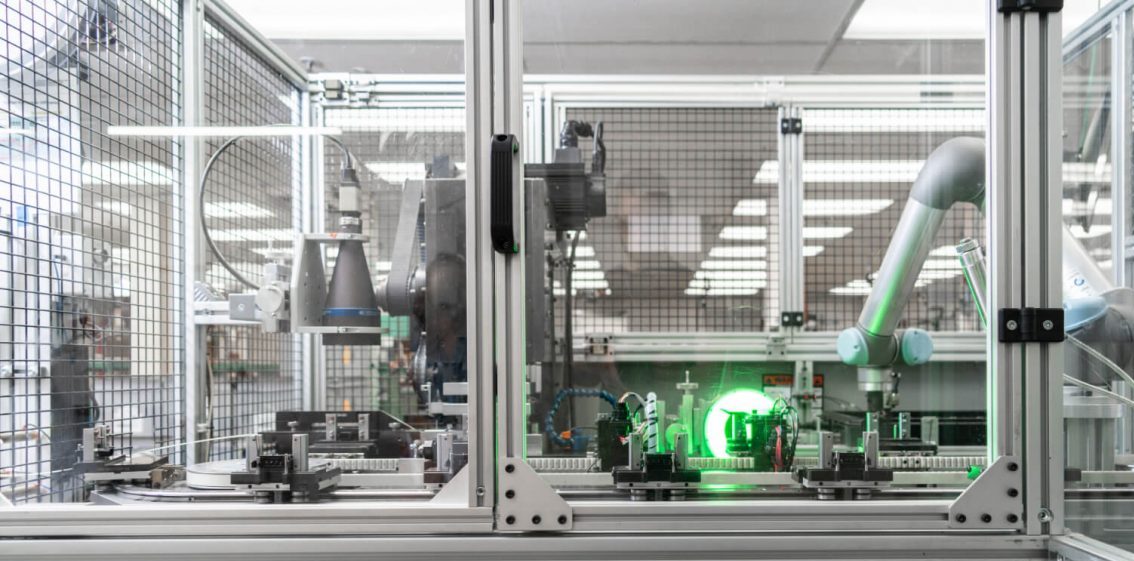
Custom automation solutions have become a defining factor in modern manufacturing efficiency. As labor markets tighten, product complexity increases, and quality expectations rise, manufacturers are turning to custom automation solutions to remain competitive. Rather than relying on generic equipment, companies are investing in automation designed specifically around their products, volumes, and performance requirements.
At New Concept Technology, custom automation solutions are engineered to improve throughput, enhance quality, and reduce long-term operating costs. By aligning automation with real-world production demands, manufacturers can achieve measurable efficiency gains while maintaining flexibility for future growth.
Custom automation solutions differ from off-the-shelf systems because they are designed around a specific process rather than forcing a process to fit a machine. In manufacturing environments where precision, repeatability, and uptime are critical, custom automation solutions deliver targeted improvements that generic systems cannot match.
Manufacturers that adopt custom automation solutions gain better control over cycle times, quality variation, and labor dependency. These solutions are especially valuable in high-volume or high-mix environments where consistency must be maintained without sacrificing adaptability. Custom automation solutions ensure that every operation—from material handling to final inspection—is optimized for efficiency.
By designing automation around actual production challenges, custom automation solutions eliminate bottlenecks and reduce waste throughout the manufacturing process.
Manufacturing efficiency is influenced by speed, accuracy, uptime, and repeatability. Custom automation solutions address all four by integrating mechanical design, controls, robotics, and data monitoring into a cohesive system.
Custom automation solutions improve efficiency by reducing manual handling and operator variability. Automated processes perform tasks the same way every cycle, leading to predictable outcomes and reduced rework. In addition, custom automation solutions can operate continuously, increasing output without increasing labor hours.
One of the most impactful benefits of custom automation solutions is their ability to consolidate multiple operations into a single automated workflow. This reduces transfer time between stations and minimizes opportunities for error, significantly improving overall equipment effectiveness.
Successful custom automation solutions begin with a deep understanding of the manufacturing process. Before a system is designed, engineers analyze product requirements, cycle time targets, quality standards, and future scalability needs. This process-first approach ensures that custom automation solutions deliver real performance gains.
Designing custom automation solutions around the process also allows for better integration with existing equipment. Instead of replacing entire production lines, custom automation solutions can enhance specific operations, preserving prior investments while improving efficiency.
When automation is tailored to the process, manufacturers gain a system that works with their workflow rather than against it. This alignment is critical for long-term success with custom automation solutions.
Integration is a key differentiator of effective custom automation solutions. When automation, tooling, and inspection systems are designed together, performance and reliability increase. Integrated custom automation solutions reduce communication gaps between machines and ensure that data flows seamlessly across the production line.
Integrated custom automation solutions also simplify maintenance and troubleshooting. With unified controls and centralized monitoring, issues can be identified and resolved faster, minimizing downtime. This level of integration supports continuous improvement initiatives and long-term operational stability.
Manufacturers that invest in integrated custom automation solutions benefit from higher uptime, faster changeovers, and improved process visibility.
Custom automation solutions leverage a range of technologies depending on application requirements. These may include robotics, vision systems, programmable logic controllers, sensors, and automated material handling. Each component is selected to support the overall goal of manufacturing efficiency.
Robotics plays a major role in many custom automation solutions, particularly for repetitive, high-precision tasks. Vision systems add another layer of efficiency by enabling automated inspection and real-time quality verification. Together, these technologies allow custom automation solutions to maintain consistency at scale.
The flexibility of custom automation solutions lies in their ability to combine technologies in ways that match specific manufacturing needs rather than forcing standard configurations.
Modern custom automation solutions are increasingly data-driven. Sensors and monitoring systems collect real-time information on cycle times, machine performance, and quality metrics. This data enables manufacturers to make informed decisions and continuously optimize their processes.
Process control is embedded into custom automation solutions to ensure that every variable stays within defined parameters. When deviations occur, corrective actions can be triggered automatically, protecting product quality and reducing scrap.
By incorporating data collection and analytics, custom automation solutions transform manufacturing from reactive to proactive, driving sustained efficiency improvements.
Custom automation solutions are widely used across automotive, medical, electronics, industrial, and aerospace manufacturing. Each of these industries demands high reliability, tight tolerances, and scalable production.
In automotive manufacturing, custom automation solutions support high-speed assembly, inspection, and component handling while meeting strict quality standards. In medical and electronics manufacturing, custom automation solutions enable precision assembly and traceability in regulated environments.
Across industries, the common advantage of custom automation solutions is their ability to deliver consistent results while adapting to evolving product requirements.
A common manufacturing challenge is managing labor-intensive assembly processes while maintaining quality and throughput. Custom automation solutions address this by automating repetitive tasks and integrating inspection into the workflow.
One example of a custom automation solution includes automated part handling, in-line vision inspection, and data tracking at each station. This type of system reduces operator count, increases output, and provides full traceability for every component produced.
This approach demonstrates how custom automation solutions can deliver immediate efficiency gains while laying the foundation for long-term operational improvement.
There are many advantages to implementing custom automation solutions, but the most impactful benefits include improved efficiency, consistency, and scalability. Below is a concise summary of what manufacturers gain:
These benefits make custom automation solutions a strategic investment rather than a short-term upgrade.
The true value of custom automation solutions extends beyond immediate productivity gains. Over time, these systems reduce maintenance costs, improve uptime, and support faster product launches. Because custom automation solutions are designed with scalability in mind, they can evolve alongside changing production demands.
Manufacturers that invest in custom automation solutions are better positioned to respond to market changes, labor challenges, and new product introductions. This adaptability is essential in today’s competitive manufacturing environment.
By aligning automation strategy with business goals, custom automation solutions become a driver of sustainable growth.

Custom automation solutions provide a clear competitive advantage for manufacturers focused on efficiency and quality. Companies that rely on generic automation often struggle with limitations that slow improvement and increase costs. In contrast, custom automation solutions are built to solve specific problems and unlock measurable performance gains.
As manufacturing continues to evolve, the demand for flexible, high-performing automation will only increase. Custom automation solutions offer the control, efficiency, and scalability needed to meet these challenges head-on.