


MENU

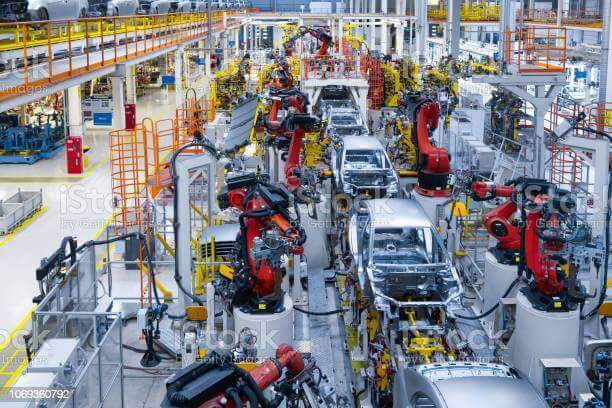
Automobile manufacturing is one of the most demanding industries in the world. Car manufacturers must produce millions of components while maintaining strict quality standards and tight tolerances. At the same time, they must keep production cycles short to remain competitive in a fast-moving global market.
Speed and accuracy are critical because even the smallest deviation in a component can affect vehicle performance, safety, and reliability. Modern automotive production relies on advanced manufacturing methods that combine automation, precision engineering, and integrated production systems.
Today’s leading manufacturers use high-performance processes such as precision metal stamping, injection molding, insert molding, and automated assembly to produce automobile parts quickly while maintaining consistent quality.
Metal stamping is one of the most efficient methods for producing automotive components at scale. This manufacturing process involves pressing sheet metal into specific shapes using specialized dies and high-speed stamping machines.
Because stamping machines can operate at extremely high speeds, they are capable of producing thousands of parts per hour. Modern stamping presses are designed to operate with remarkable precision, ensuring every part meets exact specifications.
Advanced high-speed stamping equipment can produce components from materials as thin as a few thousandths of an inch while maintaining tight tolerances. These capabilities allow manufacturers to produce small electrical contacts, brackets, connectors, and structural automotive parts with exceptional consistency.
Metal stamping is widely used in automotive production because it offers several advantages. The process supports high-volume manufacturing, reduces material waste, and delivers excellent repeatability. As a result, it remains a cornerstone of modern automotive component manufacturing.
Many automobile components are made from engineered plastics rather than metal. Injection molding is the preferred method for producing these plastic parts because it allows manufacturers to create complex shapes quickly and consistently.
In injection molding, molten plastic is injected into a mold cavity where it cools and solidifies into the final shape. This process is ideal for manufacturing components such as sensor housings, interior trim pieces, electrical connectors, and dashboard components.
Modern injection molding facilities use advanced robotic systems to improve accuracy and production speed. These automated systems allow manufacturers to maintain tight tolerances and consistent product quality across large production volumes.
Injection molding also supports a wide range of engineering plastics, allowing automotive manufacturers to choose materials with specific performance properties such as heat resistance, chemical resistance, and durability.
Insert molding is an advanced manufacturing technique that combines metal and plastic components into a single integrated part. During the insert molding process, a metal component is placed into a mold cavity before plastic is injected around it.
Once the plastic solidifies, the metal insert becomes permanently bonded within the molded part. This process produces strong, lightweight components that combine the structural strength of metal with the flexibility and insulation properties of plastic.
Insert molding is widely used in automotive manufacturing for components such as electrical connectors, wire assemblies, and structural housings. By integrating metal inserts directly into plastic parts, manufacturers can eliminate secondary assembly operations and improve product reliability.
Automated robotic systems are often used to place metal inserts into molds with high precision before plastic injection occurs. This automation ensures accurate placement and helps maintain consistent quality during high-volume production.
Automotive manufacturing facilities rely heavily on automated assembly systems to maintain high production speeds. These systems use robotics, sensors, and advanced control software to assemble components quickly and accurately.
Automation allows manufacturers to perform multiple assembly steps simultaneously while minimizing the risk of human error. Automated systems can handle tasks such as component placement, fastening, inspection, and packaging with remarkable efficiency.
Modern automated assembly lines often incorporate digital imaging inspection systems that monitor product quality throughout the production process. These systems detect defects early, allowing manufacturers to correct issues before large production batches are affected.
Automation also enables manufacturers to increase production capacity while maintaining consistent product quality. As a result, automated assembly systems are essential for producing complex automotive components at scale.
Behind every successful automotive manufacturing process is precision tooling. Tool fabrication involves designing and building the molds, dies, and fixtures used in production processes such as stamping and molding.
High-quality tools ensure that every manufactured component meets exact dimensional specifications. Without precision tooling, even the most advanced manufacturing equipment cannot deliver consistent results.
In-house tool fabrication provides significant advantages for automotive manufacturers. Engineers can quickly modify tooling to accommodate design changes, optimize production efficiency, and reduce downtime.
Tool fabrication also plays a critical role in maintaining manufacturing accuracy. Advanced machining technologies such as CNC machining, electrical discharge machining, and precision grinding allow manufacturers to produce tools capable of maintaining extremely tight tolerances.
Many automotive companies are shifting toward integrated manufacturing models where design engineering, prototyping, tooling, and production occur within a single facility. This approach allows manufacturers to streamline the entire production process.
Integrated manufacturing environments allow engineering teams to collaborate more closely during product development. Designers, engineers, and manufacturing specialists work together to optimize components for both performance and manufacturability.
By managing the entire production process under one roof, manufacturers can reduce supply chain complexity and accelerate product development timelines. This approach also improves communication between teams, allowing companies to resolve production challenges quickly.
Integrated manufacturing systems often combine multiple processes—such as stamping, molding, and automated assembly—to create complete automotive components from concept to production.
Modern automotive manufacturing methods offer several important advantages that help companies produce parts quickly while maintaining exceptional quality.
These advanced production technologies deliver benefits such as:
By leveraging these manufacturing technologies, automotive companies can maintain competitive production speeds while ensuring every component meets strict industry standards.
The automotive industry continues to evolve as new technologies transform vehicle design and production methods. Electric vehicles, autonomous driving systems, and advanced electronics are increasing the complexity of automotive components.
To meet these challenges, manufacturers are investing in advanced robotics, artificial intelligence, and smart manufacturing technologies. These innovations allow production systems to monitor performance in real time and optimize processes automatically.
Automation, precision tooling, and integrated manufacturing will continue to play a central role in producing the next generation of automotive components. Manufacturers that adopt these advanced production methods will be better equipped to deliver high-quality parts quickly and efficiently.

Manufacturing automobile parts requires a combination of speed, precision, and advanced engineering. Modern automotive production relies on high-performance manufacturing methods such as metal stamping, injection molding, insert molding, automated assembly, and precision tool fabrication.
These technologies enable manufacturers to produce complex components with exceptional accuracy while maintaining the production speed required by today’s automotive market.
Companies that invest in advanced manufacturing systems and integrated production processes can achieve faster development cycles, improved product quality, and greater manufacturing efficiency. As automotive technology continues to evolve, these methods will remain essential for delivering reliable, high-performance vehicle components.