



Metal stamping forms sheet or coil stock between a punch and a die, so the part inherits strength, stiffness, conductivity, and heat tolerance. Injection molding forces resin into a closed cavity, so the part inherits geometric freedom. Start with what the part has to do, then check geometry, operating environment, and realistic volume. When a component needs both sets of properties, insert molding combines a stamped insert and a molded body in one part.
Process selection is one of the few decisions on a program that touches cost, lead time, and field performance all at once. A component can be designed well and still land in the wrong process, and the consequences show up late: tooling that costs more than it should, cycle times that cap output, or a part that works on the bench and drifts in service.
For engineers and sourcing teams weighing metal stamping against injection molding, the comparison is rarely about which process is better in the abstract. It is about which one matches what the part actually has to do.
What Metal Stamping Does Well
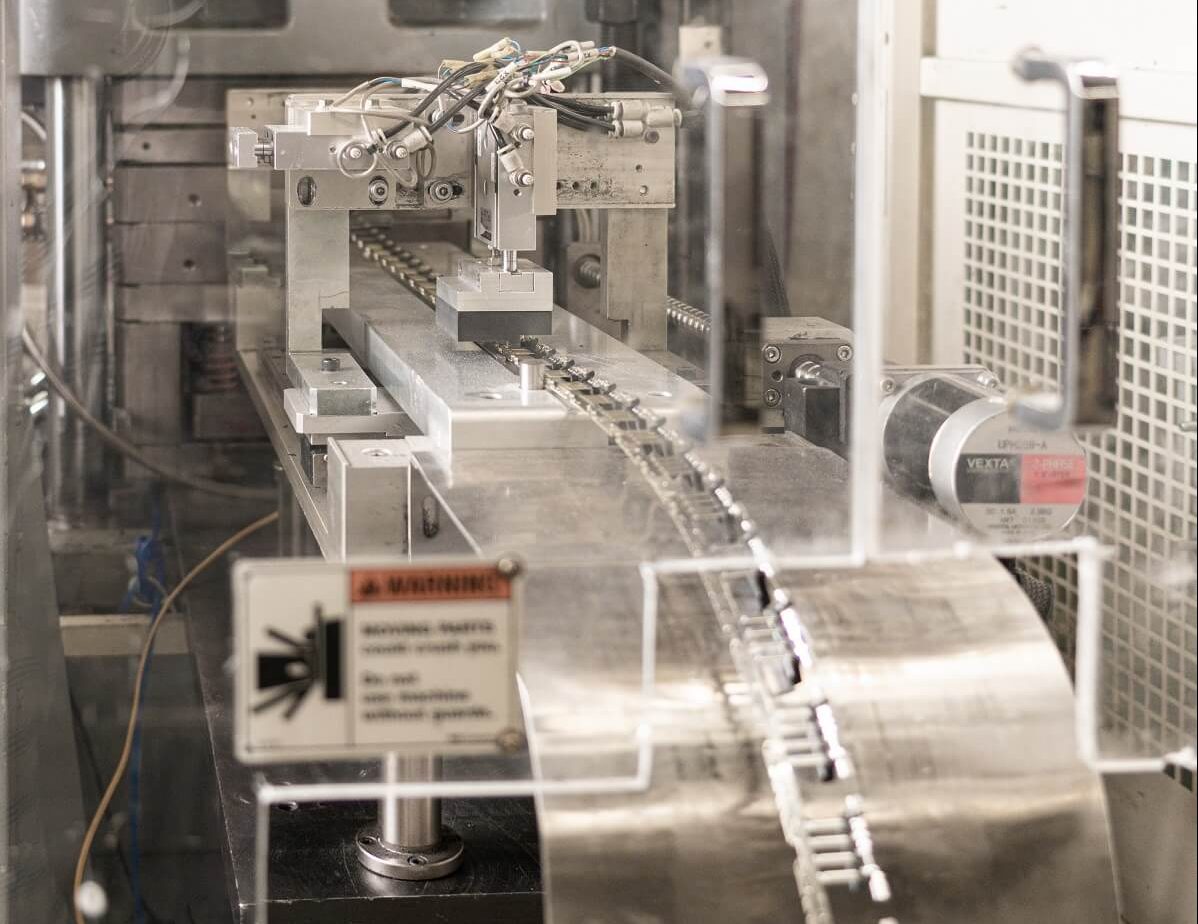
Metal stamping is a cold forming process, which means the material is shaped without being melted. A press drives a hardened punch into a matching die, and a single operation can blank, pierce, bend, form, coin, or draw the strip. In a progressive die, the strip advances through a series of stations inside one tool and a finished part leaves the die with every stroke.
That arrangement is what makes metal stamping efficient at volume. Labor content per piece is very low, scrap metal is recyclable, and a well designed strip layout controls material usage across millions of cycles. The parts metal stamping suits are the ones that have to carry a load, ground a circuit, conduct current, dissipate heat, or provide shielding: brackets, terminals, contacts, clips, springs, shields, and structural braces. Carbon steel, stainless steel, aluminum, copper, and brass each bring a different balance of strength, formability, conductivity, and corrosion resistance to those jobs.
Metal stamping asks what the part has to withstand. Injection molding asks how complex the shape needs to be. Neither set of advantages transfers to the other process, which is why the comparison resolves quickly once a team states function, environment, and realistic volume.
Where Injection Molding Has the Advantage
Injection molding starts with thermoplastic pellets fed into a heated barrel, where a rotating screw melts and mixes them before pushing the material under pressure into a closed mold. The plastic cools, the mold opens, the part ejects, and the cycle repeats. Because molten resin fills every detail of the cavity, molding produces shapes that metal stamping cannot approach.
The advantage is geometric and functional at the same time. Housings, covers, connector bodies, and enclosures come out light, corrosion resistant, electrically insulating, and often finished in color, which removes a painting operation. The tradeoff is that good molded parts depend heavily on design discipline. Uniform wall thickness, adequate draft, generous radii, and an honest allowance for shrink are what separate a clean part from one with sink marks, warp, and a tool modification in its future.
Metal stamping and injection molding differ across every factor that matters when planning a production program.
| Factor | Metal Stamping | Injection Molding |
|---|---|---|
| Primary material | Sheet or coil steel, stainless, aluminum, copper, brass | Thermoplastics and engineered resins |
| Best geometry | Flat, bent, formed, and drawn shapes of uniform thickness | Complex 3D shapes with ribs, bosses, and internal features |
| Strength and heat | High strength, stiffness, and heat tolerance | Lighter weight, lower heat resistance |
| Conductivity | Conducts current and heat; can provide shielding | Insulates against current and heat |
| Tooling | Hardened tool steel dies, often progressive | Precision molds with cooling and ejection systems |
| Production speed | A finished part with every press stroke | Cycle driven by wall thickness and cooling |
| Typical parts | Brackets, terminals, contacts, shields, clips, braces | Housings, covers, connector bodies, enclosures |
Material, Geometry, and Operating Environment
The most reliable starting point is function rather than preference. If the part carries structural load, sits near a heat source, conducts current, or acts as a ground or shield, metal stamping is usually the stronger fit, because metal holds dimension under stress and elevated temperature in ways most polymers do not. If the part needs to be light, insulate, resist chemicals or moisture, or enclose something delicate, molding usually wins.
Geometry is the second filter. Flat, bent, formed, and drawn shapes with consistent material thickness suit metal stamping. Complex three dimensional features with varying sections, internal detail, or integrated fastening suit molding. Environment is the third and the one most often underweighted. Sterilization cycles, outdoor exposure, vibration, chemical contact, and repeated flexing each place a different demand on material selection, and reviewing them during design is considerably cheaper than discovering them during validation.
Tooling Cost and Volume Over the Life of a Program
Both processes require a real upfront investment in custom tooling, and both repay it through low cost per piece at volume. What differs is the shape of that curve. A progressive die takes longer to design and build than a simple single station tool, but once it runs, it produces finished parts at press speed with minimal handling, which is why metal stamping economics improve sharply as annual quantities rise.
Injection molds carry their own variables. Cavity count raises output per cycle, cooling channel design drives how fast the part can be ejected, and cycle time scales with wall thickness and part mass. Resin pricing then sits on top of all of it. The practical guidance in both cases is the same: size tooling against realistic demand including upside, not against the nominal forecast, and compare total program cost rather than piece price. A supplier that fabricates tooling in house shortens the distance between a die or mold change and first parts, which is where launch schedules are usually won or lost.
When Metal Stamping and Molding Belong in the Same Part
A large share of modern components need metal and plastic together. An electrical connector wants stamped terminals for conductivity and a molded body for insulation and protection. Building those separately and assembling them later adds piece prices, inventory, and labor, and it introduces a tolerance stack that has to be managed.
Insert molding removes that. A stamped metal component is placed into the mold cavity, often by a robotic arm, and resin is molded around it to form one integrated part. The result holds tighter positional control between the metal and plastic features than assembly can, seals better, and cuts part count. This is also where keeping metal stamping, molding, and insert molding under one roof pays off, because the relationship between a stamped feature and the resin around it gets engineered rather than negotiated between two suppliers.
New Concept Technology produces precision metal stampings from material as thin as .004 thickness, supported by in-house premium tolerance tool fabrication.
Single Source Metal Stamping and Molding at NCT
New Concept Technology runs a 200,000 square foot facility on a 20 acre campus in Emigsville, Pennsylvania, with nearly 30 years of manufacturing experience. Five capabilities sit in house: metal stamping, injection molding, insert molding, tool design and fabrication, and automated assembly, supported by design engineering and rapid prototyping. The company holds ISO 9001:2015 and ISO 13485:2016 certification, maintains ISO 14644-1 cleanroom capability, and is C-TPAT compliant.
That range is what makes an objective process recommendation possible. A partner that only stamps will find a stamping answer. A partner that runs both metal stamping and molding, builds its own tooling, and assembles the finished product can weigh the tradeoff honestly and then execute whichever way the part points. NCT serves automotive, medical, industrial, telecommunications, electronics and datacom, and aerospace and defense customers as a single source, design through manufacturing partner, and its NECONTECH division in Mexico supports programs that need production closer to North American demand.
Frequently Asked Questions
What is the main difference between metal stamping and injection molding?
Metal stamping uses a press and die to cut and form sheet or coil metal without melting it, producing strong, conductive, heat-tolerant parts. Injection molding melts thermoplastic and injects it into a mold, producing lightweight parts with complex three dimensional shapes.
Which process is cheaper?
It depends on the part. Both require custom tooling and deliver low per-part costs at volume. Compare tooling complexity, material, cycle time, secondary operations, and annual volume across the full program rather than piece price alone.
When should I choose metal stamping over injection molding?
When the part must carry a load, tolerate heat, conduct current, or provide shielding. Brackets, terminals, contacts, clips, springs, and structural braces are common examples where metal stamping is the stronger fit.
What is progressive die stamping?
A metal stamping method where a strip advances through a series of stations inside one tool. Each station performs an operation such as piercing, bending, or forming, and a finished part leaves the die with every press stroke, which suits high-volume production.
Can metal and plastic be combined in one part?
Yes. Insert molding places a stamped metal component into the mold cavity and forms resin around it, producing one integrated part that combines the conductivity or strength of metal with the insulation and protection of plastic.
How thin a material can New Concept Technology stamp?
New Concept Technology produces precision metal stampings from material as thin as .004 thickness, supported by in-house premium tolerance tool fabrication.
Get a process recommendation from a partner that runs both.
New Concept Technology runs metal stamping, injection molding, and insert molding in house and builds its own tooling, so the recommendation reflects what the equipment will actually hold. Contact us to review your part before tooling is quoted.
Contact Us →Sources
| Organization | Resource |
|---|---|
| Encyclopaedia Britannica | Press (Machine Tool): Blanking, Forming, Drawing, and Coining |
| Encyclopaedia Britannica | Injection Molding: Materials Processing |