



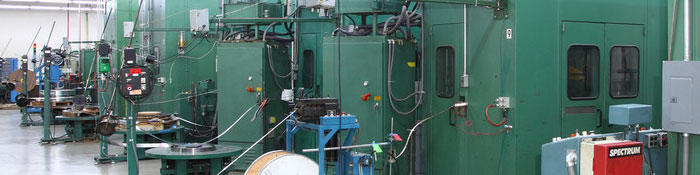
High-speed precision metal stamping holds tight tolerances at scale by combining progressive die design, staged forming, and springback compensation with process controls such as die protection sensors, consistent lubrication, statistical process control, and preventive tool maintenance. Tool wear, material variation, heat and friction, and feed errors are what pull parts out of spec, and in-house premium tolerance tooling lets NCT stamp material as thin as 0.004 inch.
Producing one accurate metal part is a matter of good tooling. Producing a million of them, all within a few thousandths of an inch, is a matter of process control. That is the real challenge of high-speed stamping: holding tight tolerances while a press cycles rapidly and a coil of material feeds continuously through the die.
For manufacturers in electronics, automotive, medical, and telecommunications, precision metal stamping delivers the consistency that connectors, terminals, brackets, and shields depend on. This article explains how high-speed stamping works, what threatens accuracy as volume rises, and how the right tooling, materials, and controls keep every part in spec.
What Makes High-Speed Metal Stamping Different
Metal stamping shapes flat sheet or coil stock by pressing it between a punch and die. Common operations include blanking, piercing, bending, forming, and coining. In high-speed production, coil material is straightened and fed into the press at a set length, and each stroke advances the strip while forming or finishing a part.
Because parts are made in rapid succession from continuous material, high-speed precision metal stamping is one of the most cost-effective ways to produce large volumes of small, detailed metal components. The same speed that makes it economical also raises the stakes, since a small drift can repeat across thousands of parts before anyone notices.
Why Tight Tolerances Get Harder at Scale
Several factors can pull dimensions out of tolerance during long, fast precision metal stamping runs.
Tool Wear
Every stroke wears punches and die sections slightly. Over time, that wear changes hole sizes, edge quality, and burr height.
Material Variation
Thickness, hardness, and flatness vary from coil to coil and even within a single coil. Those differences affect how the metal bends and springs back.
Heat and Friction
High press speeds generate heat, and friction between tool and material can cause galling or dimensional drift if lubrication is not controlled.
Feed and Alignment
If the strip does not advance precisely on each stroke, features can shift relative to one another.
The same speed that makes high-speed stamping economical also raises the stakes. A small drift can repeat across thousands of parts before anyone notices, which is why tolerance control has to be built into the die and the process, not checked after the fact.
How Progressive Die Design Protects Accuracy
Most high-volume precision metal stamping relies on progressive dies. The strip moves through a series of stations, each performing one operation, such as piercing a hole, forming a bend, or cutting the finished part free. Because the part stays attached to the carrier strip until the final station, every feature is formed in a fixed relationship to the others.
Pilots and Locating
Pilot pins engage holes in the strip at each station and pull it into exact position before the tool closes, keeping features aligned from station to station.
Staged Forming
Complex bends are formed gradually over several stations rather than in one hit, which reduces stress and improves consistency.
Springback Compensation
Toolmakers overbend or adjust forming geometry so the part relaxes to the intended dimension.
In-House Tool Fabrication
When the same team designs, builds, and maintains the die, it can adjust quickly as production data comes in. NCT pairs its stamping with in-house premium tolerance tool fabrication, keeping tooling expertise close to the press.
Process Controls That Keep Parts in Spec
Die Protection Sensors
Sensors built into the die can detect misfeeds, ejection problems, or slug pulling and stop the press before damage or defects spread.
Lubrication Management
The right lubricant, applied consistently, protects tooling surfaces and supports clean material flow, especially with harder alloys.
Statistical Process Control
Measuring critical dimensions at set intervals and tracking trends helps catch gradual drift before parts go out of tolerance.
Preventive Tool Maintenance
Scheduled sharpening and component replacement based on stroke counts keeps wear from ever reaching the part.
Together, these controls give precision metal stamping programs the stability to run long, fast, and consistently.
| Control | What It Does |
|---|---|
| Die Protection Sensors | Detect misfeeds, ejection problems, or slug pulling and stop the press before defects spread |
| Lubrication Management | Protects tooling surfaces and supports clean material flow, especially with harder alloys |
| Statistical Process Control | Tracks critical dimensions at set intervals to catch gradual drift before parts go out of tolerance |
| Preventive Tool Maintenance | Schedules sharpening and component replacement by stroke count so wear never reaches the part |
Material Selection and Thin-Gauge Stamping
Material choice affects both part performance and how tightly features can be held. Copper alloys offer conductivity for connectors and terminals, stainless steel adds strength and corrosion resistance, and specialty alloys meet unique thermal or mechanical needs. Harder materials hold their shape well but wear tooling faster, while thinner materials demand extremely precise tooling clearances.
Thin-gauge work is where precision metal stamping really shows its value. With precision tooling built in-house, New Concept Technology can stamp material as thin as 0.004 inch, supporting small, delicate components for electronics and other compact applications.
With in-house premium tolerance tool fabrication, New Concept Technology can stamp material as thin as 0.004 inch.
Case Study: Solving a Critical Alignment Challenge in Stainless Steel
A customer needed a structural part to brace a pull-to-release tab for a rapid disconnect system on a high-speed data communications transceiver module. The design called for two U-shaped formed features spaced 1/2 inch apart, each with holes to support a small diameter pin inserted through the captured pull tab. The material was 301 stainless steel, 1/4 hard, 0.020 inch (0.508 mm) thick, which made hole alignment across the two formed features a critical challenge.
NCT developed a cost-effective stamped and formed design that resolved the alignment issue. The in-house designed and built progressive die ran with special lubricants to reduce the high wear common with heavier gauge stainless steel. The program supported demand ranging from 1,000 pieces to more than 15,000 pieces per month, showing how precision metal stamping can flex with customer volume without losing accuracy.
What to Look For in a Precision Metal Stamping Partner
Choosing the right supplier comes down to capability, control, and communication. Look for:
- In-house tool design and fabrication. Faster adjustments and direct control over die quality and maintenance.
- Engineering support early in design. Design for manufacturability reviews that reduce cost and make tolerances easier to hold.
- Experience with your materials. Proven results with thin gauges, stainless steel, copper alloys, or whatever your part requires.
- A documented quality system. A quality management system certified to ISO 9001:2015, plus ISO 13485:2016 for medical programs.
- Scalable capacity. The ability to support fluctuating demand from early builds through high volumes.
- Downstream capabilities. Insert molding and assembly under the same roof, so stamped parts move straight into finished components.
Scaling Production Without Sacrificing Precision
Reliable precision metal stamping at high speed comes from the combination of smart die design, controlled materials, and disciplined process management. New Concept Technology brings those elements together with in-house tool fabrication, progressive die stamping experience, and a quality management system certified to ISO 9001:2015 and ISO 13485:2016. Trusted by multinational Fortune 500 companies, NCT also connects stamping with injection molding, insert molding, and automated assembly, so stamped components can move directly into finished assemblies. Contact NCT to discuss your next stamped part.
Frequently Asked Questions
What is precision metal stamping?
Precision metal stamping shapes sheet or coil metal between a punch and die to produce detailed parts held to tight tolerances. Operations include blanking, piercing, bending, forming, and coining, often performed at high speed in progressive dies.
What is progressive die stamping?
In progressive die stamping, a metal strip moves through a series of stations, each performing one operation. The part stays attached to the carrier strip until the final station, so every feature is formed in a fixed relationship to the others.
What causes stamped parts to drift out of tolerance?
The main causes are tool wear, variation in material thickness and hardness, heat and friction at high press speeds, and feed or alignment errors as the strip advances through the die.
How are tight tolerances maintained during high-speed stamping?
Tolerances are maintained through progressive die design with pilots and staged forming, springback compensation, die protection sensors, consistent lubrication, statistical process control, and preventive tool maintenance.
How thin a material can New Concept Technology stamp?
With its in-house premium tolerance tool fabrication, New Concept Technology can stamp material as thin as 0.004 inch.
What materials are commonly used in precision stamping?
Common choices include copper alloys for conductivity in connectors and terminals, stainless steel for strength and corrosion resistance, and specialty alloys for unique thermal or mechanical requirements.
Keep every stamped part in spec, from the first piece to the millionth.
New Concept Technology combines in-house tool fabrication, progressive die stamping, and downstream molding and assembly under one quality system. Contact us to discuss your next stamped part.
Contact Us →Sources
| Organization | Resource |
|---|---|
| American Society for Quality (ASQ) | Statistical Process Control: Principles and Applications |
| Precision Metalforming Association | About the Precision Metalforming Association |