



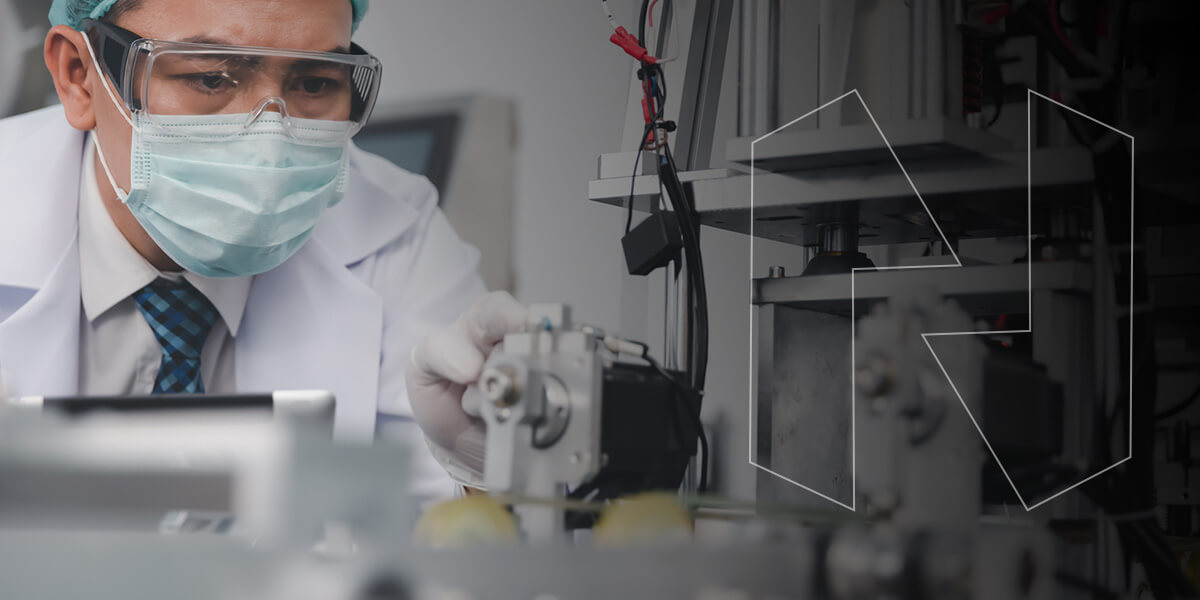
Automated assembly lets U.S. manufacturers compete on total cost instead of hourly wages by replacing repetitive manual stations with engineered systems that place, join, test, and inspect components. It lowers labor per part, cuts scrap and rework, adds built-in traceability, and supports a realistic reshoring strategy, as shown by an NCT program where three operators now run a line at three times the original capacity.
For years, the default playbook for lowering assembly costs was simple: move labor-intensive work to wherever wages were lowest. That math has changed. Long shipping lanes, unpredictable lead times, quality problems that surface weeks after parts leave the line, and the hidden cost of managing a supplier across an ocean have pushed many B2B manufacturers to take a second look at producing closer to home.
Automated assembly is what makes that move practical. By replacing repetitive manual stations with engineered systems that place, join, test, and inspect components, manufacturers can build competitively in the United States without relying on low-wage labor. This article explains how automated assembly lowers costs, improves quality, and supports a realistic reshoring strategy.
Why Manufacturers Are Rethinking Offshore Assembly
Offshore manual assembly often looks cheaper on a quote, but the unit price rarely tells the whole story. Freight, duties, inventory held in transit, travel for supplier audits, and the cost of expediting when schedules slip all add to the real price of a part. When a quality problem appears, the affected parts may already be on a ship, and containment becomes slow and expensive.
Organizations such as the Reshoring Initiative encourage companies to compare the total cost of ownership rather than the purchase price alone. When those added costs are counted, a domestic supplier with efficient, automated processes can often compete on value while giving buyers shorter lead times and closer control.
New Concept Technology has built its approach around this idea. Instead of chasing offshore, low-labor-cost manual solutions, NCT focuses on process automation that makes local production cost efficient.
What Automated Assembly Looks Like in Practice
Automated assembly uses engineered equipment to perform the steps operators once handled by hand: feeding and orienting parts, placing components, joining them, and verifying the result. Systems range from a single automated station added to an existing line to fully integrated cells that move a part from loose components to a tested, finished assembly.
Part Handling and Transfer
Conveyors, pallets, and robotic handling move each part from station to station in a controlled, repeatable way.
Joining and Placement
Automated stations press, insert, crimp, or place components with consistent force and position on every cycle.
In-Line Testing and Inspection
Electrical tests, vision systems, and measurement checks are built into the line, so defects are caught at the station where they occur instead of at the customer’s dock.
Data and Traceability
Automated systems can record what happened to each part at every step, creating a production history that supports quality investigations and continuous improvement.
How Automated Assembly Reduces Costs
Automated assembly lowers costs in several connected ways, and the savings tend to grow as volume increases.
Lower Labor per Part
Automation lets a small team oversee a process that once required many operators, so labor cost per unit falls as volume rises.
Less Scrap and Rework
Consistent placement and built-in inspection catch problems early, before more value is added to a defective part.
Higher Throughput From the Same Footprint
A well-designed automated assembly cell can run faster and longer than manual stations, increasing capacity without adding floor space.
Stable, Predictable Pricing
Because automation is less exposed to labor market swings, it supports cost-stabilized production that helps customers plan with fewer surprises.
Engineering Cost Out of the Product
NCT’s automation and cost engineering services look at the product and the process together, finding ways to simplify assembly before equipment is built.
| Cost Driver | How Automated Assembly Helps |
|---|---|
| Labor per Part | A small team oversees a process that once required many operators, so labor cost per unit falls as volume rises |
| Scrap and Rework | Consistent placement and built-in inspection catch problems before more value is added to a defective part |
| Throughput | Cells run faster and longer than manual stations, increasing capacity without adding floor space |
| Pricing Stability | Less exposure to labor market swings supports cost-stabilized production and easier planning |
Quality Gains That Protect Your Margins
Manual assembly depends on the skill and focus of each operator across every shift. Even excellent teams deal with fatigue and variation. Automated assembly holds the same process parameters on the first part and the ten-thousandth, which makes quality far more predictable.
Built-in traceability adds another layer of protection. When each part carries its own assembly and test record, a manufacturer can quickly identify which units were affected by an issue and contain it without scrapping an entire lot. For regulated markets such as medical, that level of documentation supports quality systems like NCT’s quality management system, which is certified to ISO 9001:2015 and ISO 13485:2016.
Automated assembly holds the same process parameters on the first part and the ten-thousandth. When each part also carries its own assembly and test record, an issue can be contained to the affected units instead of an entire lot.
Case Study: Three Times the Capacity With Fewer Operators
An industry-leading OEM came to New Concept Technology needing more capacity and efficiency on a product line while introducing a new, higher-performance product. The existing process used three hand assembly stations and a standalone vision inspection station, requiring a total of 10 operators. The new product added a micro-PCB with high-speed data filtering components, which made assembly and testing more demanding.
NCT designed an automated assembly machine built around a floating mini-pallet system that carries each component through every stage of processing. Each mini-pallet holds an RFID chip that stores the part’s assembly, test, and inspection records, removing the risk of errors from operator placement and providing detailed performance data for every station. The automated assembly line includes fully automated inspection with two electrical tests, a data filtering test, and visual inspection for contact true position and height.
The result: three operators now keep the process running at three times the original capacity, with better data on every part produced.
In this NCT program for an industry-leading OEM, three operators now run the process at three times the original capacity, replacing a setup that required 10 operators.
Making Reshoring Work With Automated Assembly
Reshoring succeeds when domestic production is competitive on total cost, quality, and responsiveness. Automated assembly addresses all three.
Integrated Capabilities
Automated assembly works best when the parts feeding it are consistent. NCT combines metal stamping, injection molding, insert molding, tool design and fabrication, and automated assembly in-house, so components and the systems that assemble them are developed together.
Nearshore Flexibility
For customers who want another North American option, NCT Mexico provides a nearshore production location alongside the Pennsylvania facility.
Planning an Automated Assembly Project
Successful automated assembly projects start with clear planning. These steps help keep the investment focused:
- Define the goal. Clarify whether the priority is capacity, cost per part, quality, or launching a new product.
- Review the product design. Look for ways to simplify parts, reduce fasteners, or add features that make automated handling easier.
- Map the current process. Document each manual step, cycle time, and inspection point to find the best candidates for automation.
- Build in testing and traceability. Decide which checks belong in-line and what data should be recorded for each part.
- Plan for volume and change. Design the system to support forecasted volumes and future product variations.
- Choose an experienced partner. Work with a manufacturer that can engineer the product, build the tooling, and design the automation under one roof.
Building a Stronger Supply Chain Close to Home
Automated assembly changes the reshoring conversation. Instead of competing on hourly wages, domestic manufacturers compete on consistency, responsiveness, and total cost. With nearly 30 years of manufacturing experience, a 200,000-square-foot facility in Emigsville, Pennsylvania, and in-house engineering behind every automation project, New Concept Technology helps B2B manufacturers bring production closer to home without giving up cost efficiency. Contact NCT to discuss how automated assembly can support your next program.
Frequently Asked Questions
What is automated assembly?
Automated assembly uses engineered equipment to feed, orient, place, join, and inspect components that operators once handled by hand. Systems range from a single automated station to fully integrated cells that produce tested, finished assemblies.
How does automated assembly reduce manufacturing costs?
It lowers labor cost per part, reduces scrap and rework through consistent placement and in-line inspection, increases throughput from the same floor space, and supports more stable pricing because it is less exposed to labor market swings.
How does automation support reshoring?
Automation makes domestic production competitive on total cost rather than hourly wages. Combined with shorter lead times, in-line quality control, and direct access to engineers, it gives manufacturers a practical reason to produce closer to home.
Does automated assembly improve product quality?
Yes. Automated systems hold the same process parameters on every cycle, catch defects at the station where they occur, and can record assembly and test data for each part, which makes containment faster when an issue appears.
What results has New Concept Technology achieved with automated assembly?
For an industry-leading OEM, NCT replaced three hand assembly stations and a standalone inspection station that required 10 operators. The new automated line runs with three operators at three times the original capacity.
Does New Concept Technology offer a nearshore option?
Yes. In addition to its 200,000-square-foot facility in Emigsville, Pennsylvania, NCT operates NCT Mexico, which gives customers a nearshore North American production location.
Make local production cost efficient with automated assembly.
New Concept Technology pairs in-house engineering with process automation to help B2B manufacturers bring production closer to home. Contact us to discuss how automated assembly can support your next program.
Contact Us →Sources
| Organization | Resource |
|---|---|
| Reshoring Initiative | Reshoring Initiative Background |
| NIST Manufacturing Extension Partnership | MEP Publications |